Grade 6 Split Colored Pencils: A Design Review
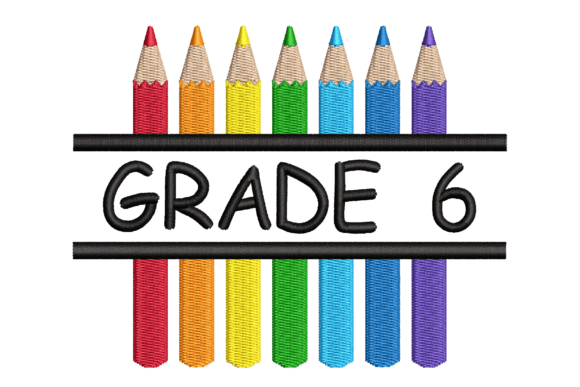
As an embroidery designer who specializes in commercial merchandise and branded assets, I approach every new machine embroidery design with a critical eye toward production viability. When reviewing the Grade 6 Split Colored Pencils artwork, my first impression is one of nostalgic professionalism blended with approachable creativity. This is not merely a decorative graphic; it is a strategic visual asset that communicates education, creativity, and attention to detail. For small business owners, Etsy sellers, and apparel decorators, this design offers a unique opportunity to bridge the gap between playful aesthetics and professional brand identity. The hand-drawn nature of the artwork suggests authenticity, which is a high-value trait for handmade brands and creative studios looking to differentiate themselves in a saturated market.
Visual Personality and Brand Alignment
The Grade 6 Split Colored Pencils design carries a distinct visual weight that feels both retro and modern. In the context of small business merch, this duality is essential. It avoids looking childish despite the school-supply motif, instead evoking a sense of craftsmanship and foundational skill. For a creative studio, tutoring center, or art supply boutique, this design signals expertise. For a café or bakery targeting families, it adds a layer of community warmth without sacrificing brand polish.
From a digitizing perspective, the "split" aspect of the pencils likely introduces color blocking opportunities that are excellent for thread colors management. Instead of relying on complex shading or gradients that can increase stitch density and production time, split coloring often utilizes solid fills. This makes the design highly efficient for commercial embroidery runs where speed and consistency are paramount. The clean lines typical of hand-drawn pencil illustrations usually translate well to satin stitches or running stitch outlines, ensuring the finished product remains crisp even after repeated washing.
Strategic Applications for Business Merchandise
When integrating Grade 6 Split Colored Pencils into a product line, versatility is key. Based on the design’s structure and theme, here is how I recommend deploying it across various business assets:
- Embroidered Patches: This design is an ideal candidate for merrowed edge patches. The distinct shape of pencils allows for easy cutting and backing application. These can be sold as standalone add-ons for school bags or used as branding elements on staff uniforms for educational businesses.
- Tote Bag Design: Canvas totes are a staple for Back To School seasons and craft fairs. The vertical orientation of pencils complements the tall aspect ratio of many tote bags perfectly. Ensure you use a heavy-duty stabilizer to prevent puckering on unstructured canvas.
- Apron Embroidery: For art teachers, pottery studios, or kids' cooking classes, placing this design on the chest or pocket of an apron creates instant role recognition. The design serves as a functional label while enhancing the perceived value of the custom apparel.
- Cap Embroidery: While possible, cap fronts require careful evaluation. If the pencils are arranged horizontally, they may work well. However, if the design is tall and narrow, it may need resizing or re-digitizing specifically for curved surfaces to avoid distortion.
- Sleeve Details: For a subtle branding touch on polo shirts or hoodies, consider scaling the design down for sleeve placement. This acts as a secondary logo that reinforces the primary chest branding without overwhelming the garment.
Production Considerations and Technical Constraints
While Grade 6 Split Colored Pencils is a beautiful concept, successful execution requires respecting technical limitations. As with any digital embroidery file, you must verify the specifications before committing to bulk production. Because specific stitch counts and hoop sizes are not provided in the standard description, you must request these details from the digitizer or test the file yourself.
Fabric Texture and Stability: Hand-drawn designs often feature organic lines that can get lost on highly textured fabrics like terry cloth or fleece. For Grade 6 Split Colored Pencils, I recommend smooth surfaces such as twill, poplin, denim, or tight-weave canvas. If you must embroider on textured material, use a water-soluble topping to keep the stitches visible and defined.
Size Reduction Risks: Small business owners often want to maximize utility by shrinking designs for tags or cuffs. Be cautious. If the pencils contain internal text or fine separation lines, reducing the design below its minimum recommended size will cause thread breaks and muddy details. Always check the smallest legible size during your testing phase.
Color Contrast on Dark Uniforms: Pencils are traditionally yellow or wood-toned. If applying this to navy or black uniforms, ensure there is sufficient contrast. You may need to add a white underlay or outline to make the design pop against dark backgrounds. Without this adjustment, the design may disappear visually, wasting production effort.
Enhancing Customer Trust Through Quality Execution
In the handmade and small business sector, the quality of your embroidery directly correlates to customer trust. A poorly executed Grade 6 Split Colored Pencils design—plagued by registration errors or excessive jump stitches—can devalue your entire brand. Conversely, a pristine execution elevates a simple pencil graphic into a premium badge of quality.
This design impacts buyer engagement by triggering emotional connections to learning and creativity. When used on packaging accents or thank-you cards (via printable mockup integration), it extends the brand experience beyond the physical textile. For Etsy sellers, listing photos showing the design being stitched out in real-time can demonstrate transparency and craftsmanship, significantly boosting conversion rates.
Essential Pre-Production Checklist for Decorators
Before loading the embroidery file for a client order or personal stock, complete this professional review process:
- Verify Commercial Licensing: Confirm that the purchase includes rights for selling finished goods. "Hand-drawn by an embroidery artist" implies intellectual property; ensure your usage aligns with the license terms.
- Test in Black and White: Run a grayscale simulation or actual test stitch to evaluate depth and definition independent of color. If the design looks flat in monochrome, it may lack necessary texture mapping.
- Check Hoop Size Compatibility: Measure the design dimensions against your available hoops. Avoid using a hoop significantly larger than the design, as this reduces tension stability.
- Evaluate Thread Inventory: Split colored pencils may require specific shades to achieve the intended artistic effect. Verify you have matching threads before starting a batch run to avoid mid-production substitutions that alter brand consistency.
- Create Client Mockups: Use software to overlay the design on the actual garment style the client intends to buy. This manages expectations regarding scale and placement.
- Inspect Stabilizer Pairing: Match the stabilizer to the end-use. A tear-away might suffice for a patch, but a cut-away is mandatory for stretchy knitwear to maintain the integrity of the pencil outlines over time.
Final Verdict for Business Integration
Grade 6 Split Colored Pencils represents a strong contender for businesses operating at the intersection of education, creativity, and family-oriented services. Its hand-drawn origin provides the human touch that mass-produced clipart lacks, while its thematic clarity ensures immediate recognition. By treating this design assets package with professional rigor—testing thoroughly, respecting fabric limitations, and verifying licensing—small business owners can transform a cute school supply illustration into a powerful tool for brand building and revenue generation. Whether adorning a tutor’s tote bag or a boutique’s seasonal collection, this design proves that thoughtful embroidery is always in style.